(19th Oct 2025 – 13 mins read)
Before you read any further:
| “Did I just tear my Achilles tendon … !?” (if any doubt, click that link!) |
TL;DR: My own personal journey was the reason I started writing, it was therapeutic. However, my long-term aim has become to ‘package’ my story as a part of a parcel to help anyone else suffering from a ruptured Achilles, particularly as they go through the first few days to weeks.
BTW: This is not a ‘blog’ (despite the web-address) …
… and certainly not a ‘social media’ thing.
These web pages feature a combination of links to YouTube ‘success stories’, Reddit users and threads, white papers / studies (I’m an engineer, so sue me 😜), etc.; further, my aim is to provide tips concerning useful gear, using crutches, basically anything and everything I can think of which might help … other than medical advice (I am NOT a doctor!).
It should also be clear that everyone’s injury and body is different; there are umpteen other variables too, i.e. there is no “one size fits all” treatment that is guaranteed to lead to a successful recovery (unfortunately!). Even the type, position and extent of the rupture will tend to point in one direction or another.
I would like to add that I recognise that I am privileged to live where I do, to have the health insurance that is standard in Germany – some things I may suggest or mention may simply not be available / possible where you are … if I can, I’ll add alternatives covering multiple options.
That said, let’s move on to …
My rupture – how my ‘recovery journey’ started
Another great Sunday session spent in ‘my’ local boulder gym in Bavaria, Germany … until, after a good 2 hours bouldering (why the hell didn’t I quit while I was ahead?!), I decided to make one last fateful attempt at a route I’d successfully completed (but, for my liking, not ‘cleanly enough’ 🤦♂️) – “one last go … polish up the second half!” I thought.
Well, I was certainly right about the “one last go” bit, anyway 😅 😵 🙈 !
Tired and unfocused, I had essentially already ‘ticked off’ the first jump in my head (having done it probably 30-40 times without a problem); instead, I was looking ahead to the 2nd, 3rd, 4th moves to do my best to complete these in one flowing set of movements – a bad idea for a tired person.
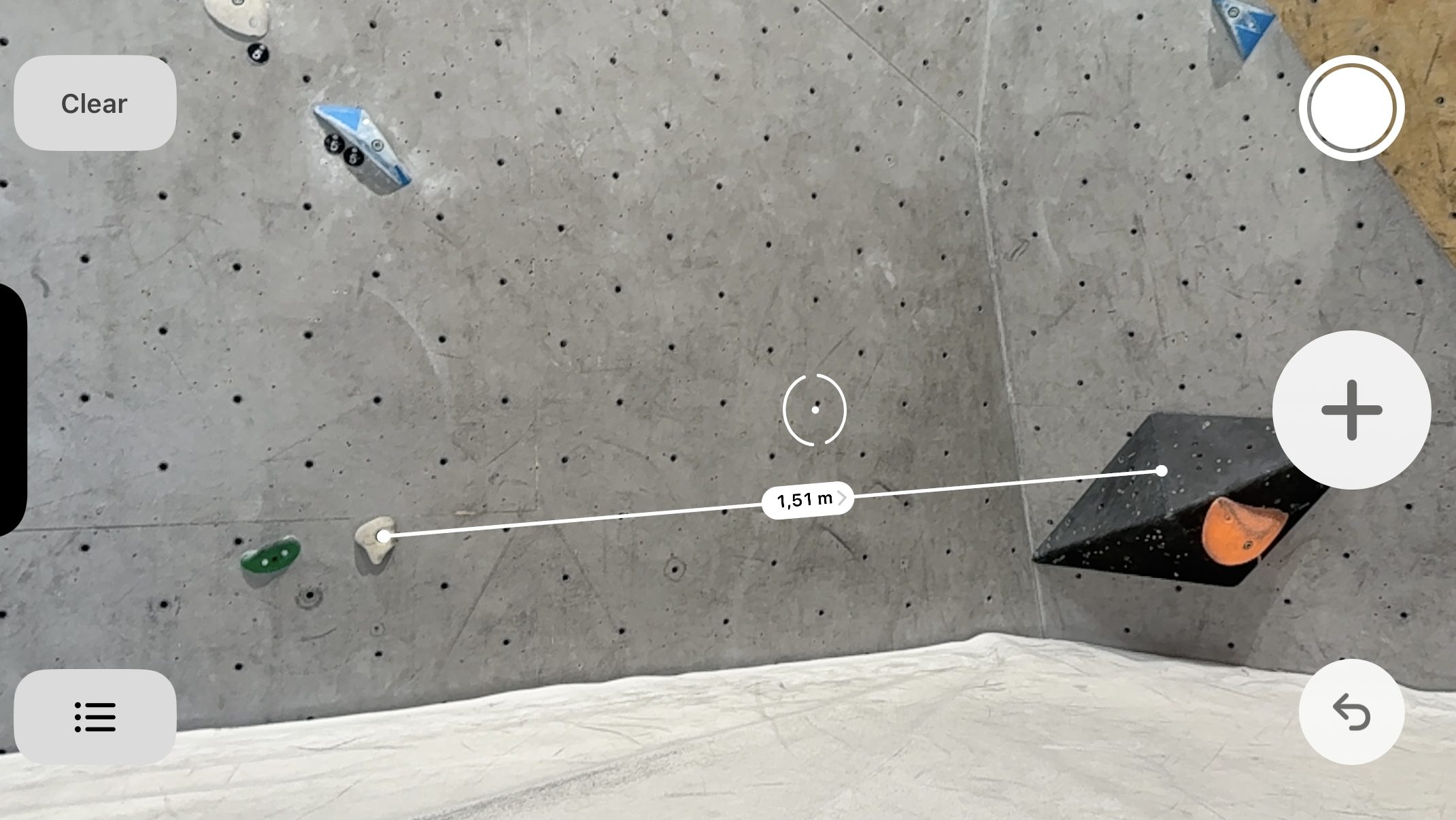
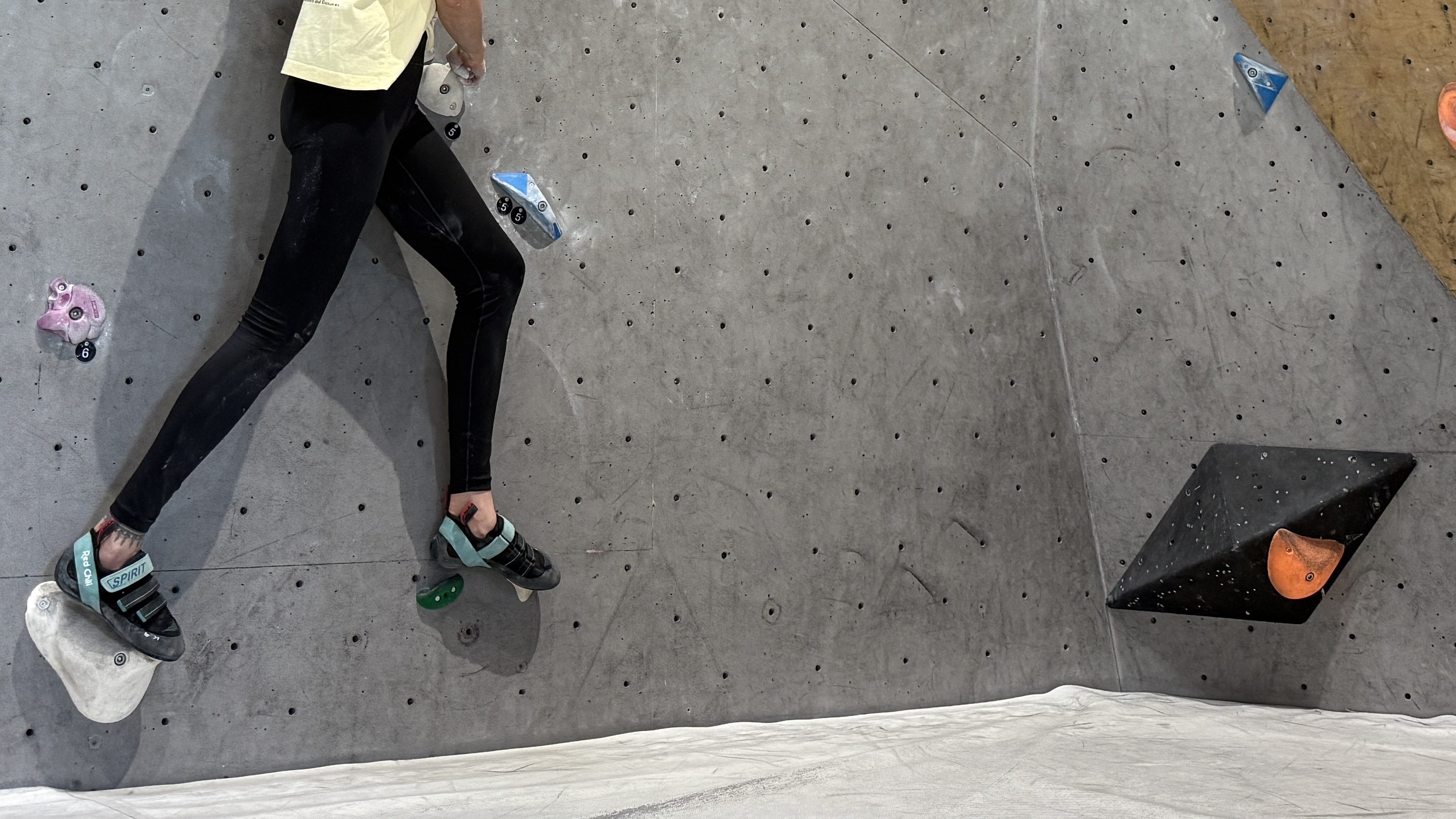
The result: I just didn’t quite jump far or high enough, landed badly on the black pyramid ‘volume’ on the right, foot already extended downwards to the max dorsiflexion limit … < SNAP > … yes, you could hear it go, probably from 5m away, so I knew instantly my achilles was torn; I gingerly traced the line of my tendon, as if there was even a slight chance I could be wrong, and felt a big ‘dent’. Buuut … yeah, nah … done ‘n’ dusted. FUUUCK!!
The owner of the gym just happened to be bouldering at the same time with his daughter; he and my friend (also bouldering partner and colleague) looked after me as I managed to avoid passing out a few times over the next 15-20 mins; I then hobbled, with help, to my friend’s car and off we went to the ER – “weird,” I thought, as we drove, “it’s painful, yes, but really not that bad … maybe a 2/10 or tops 3/10”; the ‘replay’ in my head of my toes bending up towards my shin, waaay too high, the < SNAP >, feeling the dent … all of it just sickening, THAT was actually worse. So, yes, I’m proud to have managed not to puke in the car 🥳 🕺 😂 (touch of sarcasm) … but I was very appreciative of having a friend there at my time of need, able and willing to drive me to the hospital … not everyone is that lucky!
My ER experience
I was given a wheel chair at the ER; a friendly lady took my details; I was blessed with a short wait before an initial examination (doctor was great): ultrasound and ‘Thompson Test‘ (The doctor will squeeze your calf to see if your foot moves—if it doesn’t, that’s the rupture confirmation), both tests confirmed a complete rupture; an x-ray was done a little while later to confirm no bits of bone were torn off (the x-ray lady was the only person who was not so friendly … Sunday evening in the hospital … ’nuff said 😅 !).
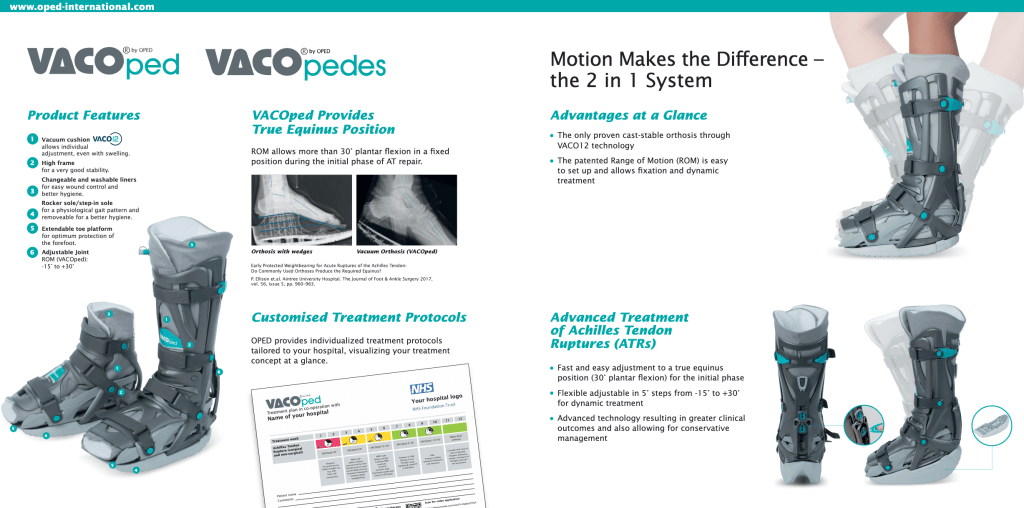
After that, a nurse helped me into a VACOped orthopedic ‘boot’ (indeed, it was designed by an engineer who previously developed ski boots!) – this was, I think, the most important thing that happened that evening: whether one believes in the 48 hour limit or not for a non-operative (‘conservative’) treatment, for sure, the sooner the better your foot gets into that ballerina 30° pointy foot (‘equinus’) position, the better; it doesn’t have to be a VACOped boot, it might also be a cast, or some other brand of boot, main thing is that the foot is immobilised in this position.
.
She also gave me a blood-thinner injection to minimise the risk of DVT (Deep Vein Thrombosis); before I left, the doctor handed me a report: basically, an MRI should be done, then we’d see whether an operation was necessary or not … because yes, despite me being 55 and loving hiking, running, mountain biking and climbing, a non-operative treatment was still, apparently, an option. And one thing was sure: if there was ANY way I was going to get back to my beloved bouldering / climbing, I was going to be going that way – my love for this sport started in 2016 and it quickly became a key part of my life:
Achilles rupture healing phases
Note: it may help to know approximately what the main bodily processes are following a rupture:
(1) After a short initial ‘haemostasis’ phase, a week of internal first-aid during the ‘inflammation’ reaction occurs;
(2) ‘proliferation’ involves about 3 weeks of the body pumping out collagen to form a kind of internal ‘plaster cast’ and bridge the gap between tendon ends;
(3) ‘remodelling’: loading of the tendon is important to get that chaotic pile of collagen ‘Type 3’ fibres aligned / oriented and turned into a strong tendon, made of ‘Type 1’ collagen).
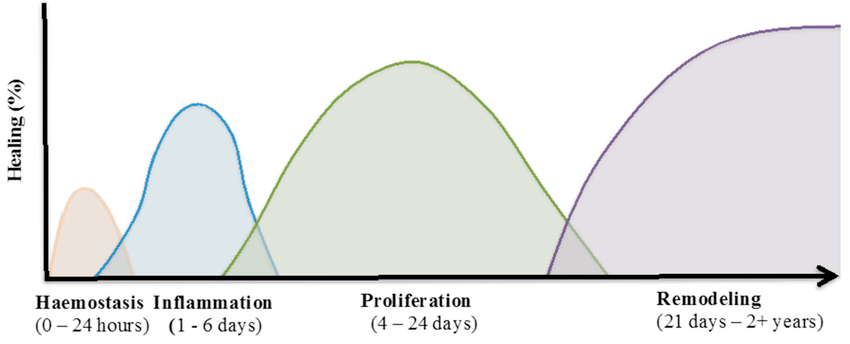
These phases naturally overlap; the periods will vary from case to case as shown in the graphic above … but this means, you should have a week or so to get medical advice – once you have that boot or cast on, you have some room to breathe to visit multiple doctors to get 2nd (and maybe 3rd opinions), get MRIs done (if possible), read up on the topic, make decisions, etc.
It is not the case that every single hour counts as far as the tendon healing is concerned … it’s a marathon, not a sprint. BUT: do pay attention to signs of a blood clot, for example swelling and/or a painful calf, as this requires immediate medical attention – see references to DVT! If you opt for an operation, you’ll have time to do meal preparation and other pre-op things on top.
Now, back to that evening …
Returning home from the ER
My partner came and picked me up from the ER (even if I’d had a car, there would have been no question of me driving myself). I ‘crutched’ the 90m / 100 yards or so to the car, on crutches for the first time in my life – those things are a blessing and curse at the same time … if it’s your first time too, this page on walking with crutches may help.
I experienced some throbbing in my affected foot, but the pain died down once I was back home in my bed with my foot up (elevate – see also next section below!) … and – apparently relatively typical for such a rupture – I didn’t need any pain killers at any time later either; finally, despite (but also because of) the ‘boot’, I slept soundly through the night … and that was the end of that ‘Day Zero’ for me.
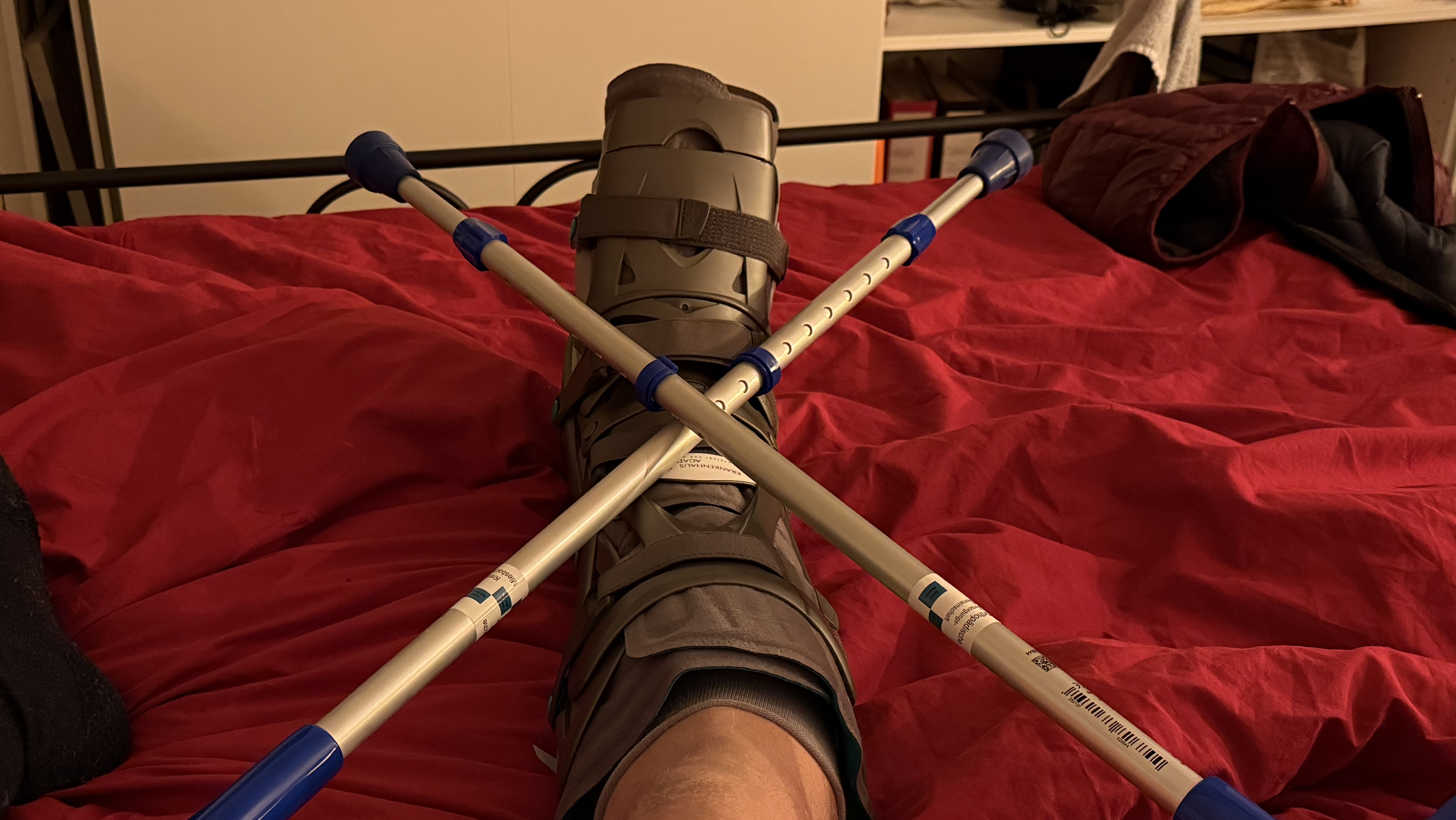
The VACOped boot from the company Oped … the engineering is amazing; I, personally, find it super comfortable.
Although relatively expensive (300-600€), due to the fact that you typically ‘only’ need such a boot for relatively short periods of time (6-12 weeks), a second-hand one can be a great and affordable option if not available directly via health insurance!
Preparations for the ‘first night’
Forget the long-term for a second and just check these five things for tonight:
- Toes Above Nose: to keep swelling (and pain) down, it’s helpful to keep your foot higher than your heart – 1 or more normal pillows is a good start … if your foot throbs, it’s too low;
- No-Weight: even if it doesn’t hurt, do not “test” the foot or put it on the floor even to balance; even if the cast or boot is removable, leave it on … yes, even to sleep;
- Backpack Life: you just ‘lost your hands’ — they are now used for / occupied with crutches. Find a small backpack tonight. It is the only safe way you will be able to move a laptop, a bottle of water, a snack or similar from room to room;
- Command Center: set up your “nest” before you hit the hay (couch or bed); make sure a phone charger, any meds, a bottle of water, anything you need during the night is within arm’s reach – initially, minimise the need to move;
- Mental Reset: It’s very possible you’re already mourning your sport or your freedom – I was. That’s normal. But remember: the inflammation is already starting the work of knitting you back together. Your only job tonight is to stay still and let your body do its thing.
Reasons to read on
May you find some connections, some useful info, some distraction, maybe some smiles … maybe even some laughs (🥹 🙏 😁 … as dark as these times may seem, it’s possible!); more than anything else, may you find some real help for your recovery journey amongst these words – again, this is not a blog, I am not looking for followers.
I will revisit the individual pages occasionally, re-read and add more info and links relevant to the current timeline; I’ll fill out the ‘Future-Sol’s reflections‘ sections at the end of each page to keep things relevant and as helpful as possible; if you have any suggestions, you can reach me via the comments or email me:
sols_achilles_stuff@icloud.com.
Finally: some injure themselves while working, or just by tripping over, rather than having the opportunity to make a stupid mistake whilst enjoying an amazing hobby, as I did; I am fortunate enough to have lots of support on my own journey from family and friends, as well as professional expert help (such as the good folks at my local physio practice plus an American Achilles tendon sport rehab specialist); last but not least, there is the amazingly open and welcoming community centred around ‘my’ local bouldering gym. I appreciate that not everyone is as lucky as me.
As a ‘fellow rupturee’, however it happened and wherever you may be: make the most of the support network you do have, as large or as small as it is! Get in touch with friends and family you haven’t talked to in ages. Make new connections on (for example) this dedicated Reddit sub and elsewhere on the web (none of which costs a penny). For as difficult as this injury is, as long as your recovery may be: you’re not the only one who is currently unable to do sport, perhaps even unable to move much at all; you will find like-minded others if you look for them … and ‘a problem shared is a problem halved’. If nothing else, at least it will make it more bearable if you have some companions for this recovery journey who really understand what you’re going through!
Further links
If your rupture just happened today, and it’s evening already (or even nighttime), try and get some sleep; if you can’t, or you simply have some time to pass, maybe click through the next few introductory links and / or move onto the next pages where you’ll find plenty more info and lots of external links (including hope-inducing ‘success stories’!):
- just injured your Achilles? (just in case you missed or skipped that link up top!)
- who am I?
- my journal ‘mission statement’
Future-Sol’s reflections (19th Dec ’25)
I slept reasonably well (luckily, my injury was almost painless). But not before I had spent several hours on the laptop gathering infos to try and prepare myself for the inevitable medical appointments. Although it’s clear that I am not going to turn into a medically-trained professional overnight thanks to a few hours of online research, I always try and read up on any injury, if I’m in a position to do so … at the same time, I do keep in mind that the internet features many ‘worst case’ scenarios which probably don’t apply.
I say this because it’s my experience, at 55, that the general medical infrastructure / ‘apparatus’ is not there to educate me, the patient, even though 99% of the people I’m going to meet will mean well in general; hospitals are, in most cases, essentially run as companies with a priority to balance books (potentially make profits), independent of those well-meaning individuals. At any rate, I never count on meeting / being treated by one of the top people in their field. It’s my injury, my body, my decision – I’m essentially the only one in the world to whom the outcome of my rehab is really important!
So I do my homework as best I can; I try and be proactive, write down questions for the next medical appointment so I don’t forget, and am never afraid to open my mouth and demand explanations when things don’t make sense (most medical staff, if only due to time pressure, will give instructions without explanations). Some may not like my attitude, but I would not hesitate to seek an alternative medical professional if the current one doesn’t take time for me, perhaps treats me as a patient to be processed rather than a person (particularly at a first appointment) – some doctors may not like to be questioned, but again, it’s my body!
Nevertheless, please do recognise, however, that doctors are people – they also have bad days and misunderstandings occur too! Hence I always aim to get (at least) a second opinion if I possibly can before making an important decision. In this case, initially, it meant choosing either the operative or non-operative path … this had to be a priority … the sooner I acted, the better; I got two different opinions initially, so I went looking for a third – with the healthcare in Germany, I am spoiled with this possibility. This is not about “doctor shopping”, this is about trying to find the best medical care I could, during a critical phase of my recovery, and no single human (doctor) is perfect.
 Achilles Rupture Recovery
Leave a comment